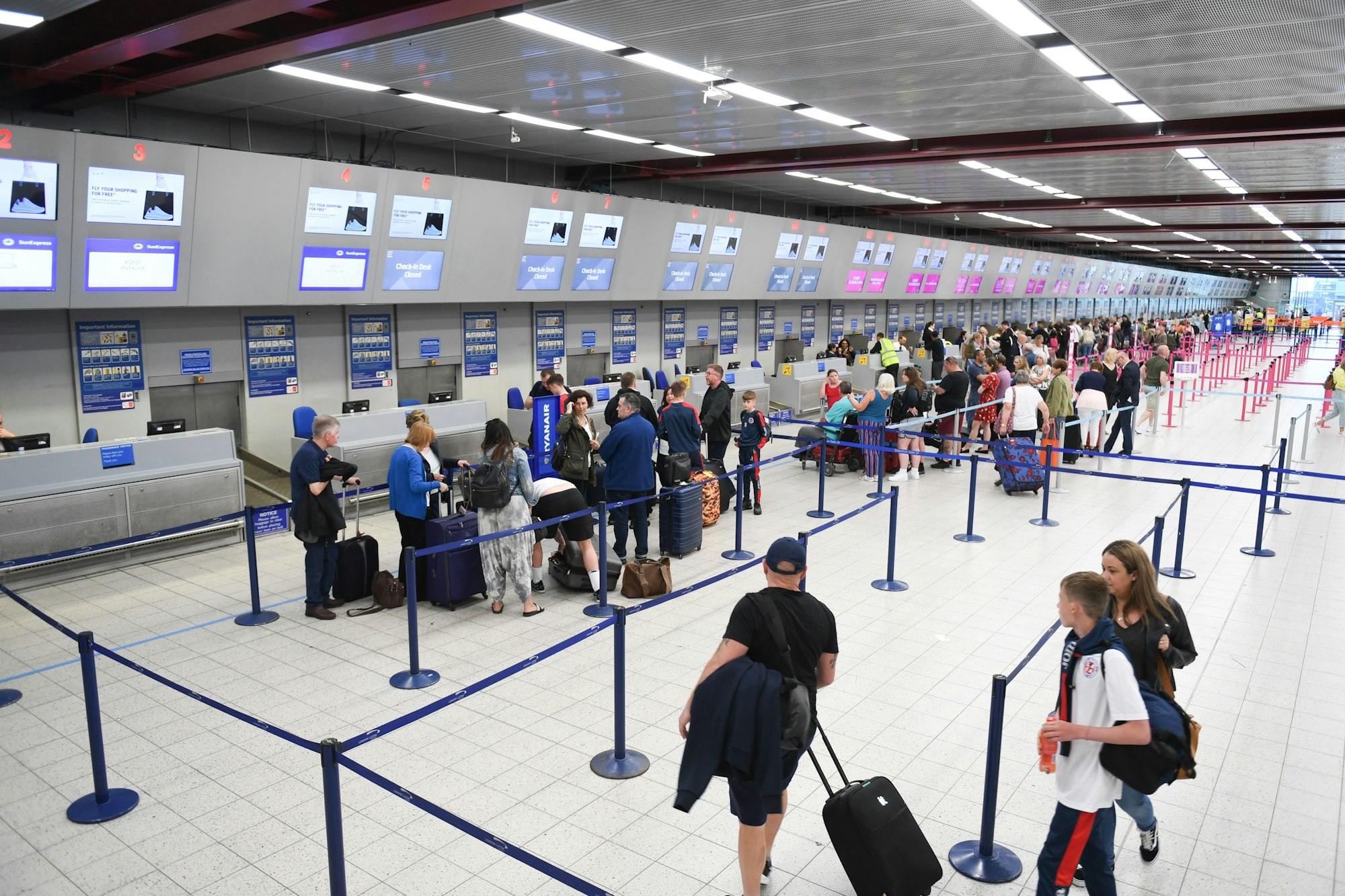
Passport stamps give way to fingerprints as Europe quietly rewrites the rules of arrival.
Goodbye passport stamps, hello fingerprints. Europe’s new digital border system wants to know you better than your TSA agent does.
Starting October 12, Americans flying to Europe will encounter a very different system at passport control. Nearly 30 countries in the Schengen Area are switching to the EU’s new Entry-Exit System (EES), a digital border program designed to replace the traditional stamping of passports with electronic records and biometric checks.
The Schengen zone includes most of the EU, such as France, Germany, and Italy, as well as non-EU members Switzerland, Iceland, Liechtenstein, and Norway. For decades, travel within this zone has involved minimal border controls, but the introduction of the EES marks a move toward more structured monitoring of visitors from outside Europe.
What Changes for American Travelers
For US citizens, the immediate change is that border officers will no longer stamp passports. Instead, personal information such as names, passport numbers, and entry and exit dates will be stored in a centralized database.
First-time arrivals after October 12 will also need to provide biometric details, including fingerprints and a facial image. On later trips, only those stored identifiers will need to be verified.
According to the EU, the passport control officers will verify fingerprints and photos on subsequent visits, which officials claim will take less time than traditional passport checks. However, initial processing is expected to take longer, particularly during the first months of implementation. Travelers should be prepared for additional wait times at borders as the system rolls out.
The stated purpose is twofold: to speed up checks and to ensure travelers respect the rule that allows only 90 days of stay within a rolling 180-day period.
A Phased Rollout with Gradual Implementation
The EES won’t appear everywhere at once. The European Commission has designed a progressive six-month rollout that prioritizes gradual adoption over immediate full implementation.
From October 12, at least one border point in each participating country will operate the new system, with this expanding to 10% of border points after the first 60 days. By December 2025, borders operating EES will begin taking biometric checks including facial scans and fingerprints. In January 2026, half of all border points should be operating EES, processing at least one-third of passengers through the system.
By March 2026, all borders will operate EES and take biometrics, processing at least half of passengers. Full implementation, with all borders processing all passengers through EES, is scheduled for April 10, 2026.
During this transition period, travelers may still see their passports stamped as usual in some locations, and biometric data might not be collected at every border crossing point right away. The experience will vary depending on where travelers are crossing and when.
Self-Service Kiosks and Advance Registration
Travelers might also encounter self-service kiosks or mobile apps at certain border points, which could allow them to register some data in advance. As the EU explained, “This process can be quicker if you register some of your data in advance.”
However, every traveler will still need to interact with a border officer, and in some cases, data may need to be collected again. The EU has confirmed that questions about medical insurance may be asked at kiosks in some locations, though it remains unclear how broadly this requirement will be enforced.
Anyone who refuses to provide biometric data will be denied entry to the region. The system will also keep track of people who were denied entry. Children younger than 12 years old will not have their fingerprints collected, though they will still need facial scans taken.
EES vs. ETIAS: Two Separate Systems
While the EES is about logging entries and exits, it should not be confused with ETIAS (European Travel Information and Authorization System), a separate travel authorization requirement set to launch in late 2026.
ETIAS will require Americans to complete an online application and pay a fee before boarding a flight to Europe. The authorization fee has been increased from the originally planned €7 to €20 (approximately $22) for travelers between ages 18 and 70. Those under 18 or over 70 are exempt from the fee.
Once approved, an ETIAS authorization will be valid for three years or until the passport expires, whichever comes first. It will be required for short stays of up to 90 days within any 180-day period. The ETIAS is expected to begin operations in the last quarter of 2026, with a transitional and grace period before becoming mandatory in 2027.
Both systems will eventually be required for American travelers to Europe, adding layers of pre-approval and biometric tracking to what was once a relatively simple process.
The Privacy Implications
For privacy-minded travelers, the shift raises significant concerns. Extensive personal and biometric information will now be retained by European authorities each time an American crosses the border.
Biometric data is fundamentally different from traditional forms of identification. Unlike passwords or PINs, fingerprints and facial features cannot be changed if compromised. Once collected, this biological information becomes a permanent identifier that, if breached, could be used for identity theft, fraud, or unauthorized tracking.
The EU claims the EES complies with the General Data Protection Regulation (GDPR), following principles of purpose limitation, data minimization, and proportionality. According to EU statements, biometric data will be stored in the EES for three years after a traveler’s last entry or exit, with special reduced retention periods applying to family members of EU citizens.
However, these assurances may provide little comfort to travelers concerned about data security, government surveillance, or the potential for mission creep in how this information might be used in the future. The system creates a centralized database of international travelers’ movements and biological identifiers, accessible to border authorities and potentially other security agencies.
Broader Context: The Biometric Border Trend
The EES is part of a broader global trend toward biometric border control. Similar systems exist in the United States (with the Electronic System for Travel Authorization or ESTA), Canada, Australia, and increasingly, the United Kingdom, which launched its own Electronic Travel Authorization scheme earlier this year.
The US government has also been actively pushing for access to EU member states’ biometric databases. According to reports, American authorities continue to seek agreements that would allow access to national biometric databases of countries participating in the US Visa Waiver Programme, with a target date of 2027 for implementing the Enhanced Border Security Partnership.
This suggests a future where biometric data sharing between governments becomes routine, raising questions about who has access to this sensitive information and how it might be used beyond border control purposes.
Security vs. Surveillance
The European Commission frames the EES as a security enhancement that will help prevent irregular immigration, identify overstayers, and reduce identity fraud. By accurately tracking data and enabling real-time access to reliable information, the system aims to help authorities swiftly identify individuals posing security threats.
Officials also argue that with increased use of automated border checks, traveling will become smoother and safer for all legitimate visitors.
But critics point to the inherent tension in biometric systems: the same qualities that make them powerful for identification also make them vulnerable to misuse. Facial recognition technology, in particular, has sparked controversy due to its potential for enabling mass surveillance without individuals’ knowledge or consent.
Unlike traditional security measures, biometric surveillance is passive and continuous. Once enrolled in a system, travelers can be identified and tracked across multiple locations and over time. This creates what privacy advocates describe as a chilling effect on freedom of movement and expression.
What Travelers Should Know
For American travelers planning trips to Europe after October 12, 2025:
- Be prepared for longer wait times at border control during the initial rollout period- Expect to provide fingerprints and a facial image on your first entry after October 12- Your biometric data will be stored for three years and linked to your passport- Refusal to provide biometric data means denial of entry- Children under 12 will need facial scans but not fingerprints- ETIAS will be required in addition to EES starting in late 2026, with an application fee of €20- Check official EU sources for the most current information as the system rolls out
The new system represents a fundamental shift in how Europe manages its borders and monitors international visitors. While officials promise greater security and efficiency, the trade-off comes in the form of expanded biometric surveillance and centralized tracking of travelers’ movements.
For those who value privacy and view government data collection with skepticism, the EES marks yet another step toward a world where crossing borders means submitting to increasingly invasive identification and tracking systems.
Tools to Protect Your Privacy
As biometric data collection becomes more prevalent, understanding your rights and the legal landscape is crucial. Check out these privacy resources:
- PII Compliance Navigator - Navigate U.S. state privacy law sensitive data categories- US State Breach Notification Tracker - Track breach notification requirements across states- Biometric Privacy Tracker - Monitor biometric data regulations and your rights
*Stand against censorship and surveillance. *